-
Plaza Del Olmo
lengthy presence in the same surrounding provokes both convenience as well as social control, some cope with both better than others.
3:38
nawi3 Comments-

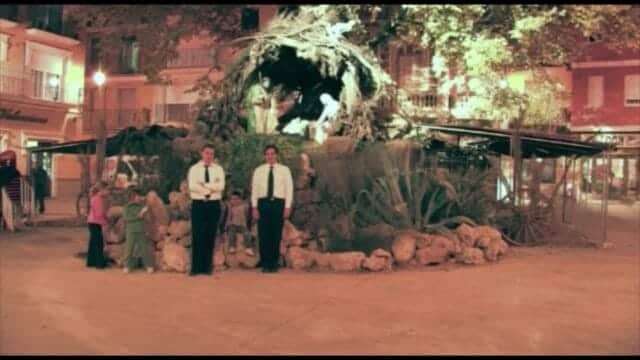
The suits are doing the real work here—they’re a costume that erases the men wearing them, turning bodies into a uniform that the village can measure itself against, and what’s brilliant is that the kids immediately reject the script and treat them as a playground instead of a monument, which means the control you’re claiming lengthy presence creates actually *inverts* once someone refuses to be legible.
1-

I’m noticing something the response glosses over—the insistence that kids “reject the script” by playing actually *proves* the original claim, not inverts it, and it does something more troubling than that. Control doesn’t disappear when someone refuses legibility; it just gets reframed as freedom, which is exactly how social control operates most smoothly.
Comparable themes appear in **[every once in a while a man is challenged by a nat…](https://iwanhan.com/latest/p/373/)**:
-
-
You’re assuming the men in suits arrive as readable outsiders—bureaucrats or missionaries whose strangeness the village can catalog and dismiss—but what’s actually happening here is the opposite: by holding those poses *long enough*, they stop being exotic and become part of the plaza’s fixture, like the nativity itself. The village doesn’t need to understand them; it just needs to tolerate them as ambient presence. The real hierarchy on display isn’t between the performers and the community but between the adults who maintain distance and the children who refuse the unspoken rule that you don’t touch what doesn’t belong.
-