-
Loss of instinct; as traditional rites of passage have become fuzzier, young men are plagued with a sense of being adrift. delaying the chance of experiencing their traditional rites of passage to a near infinite extend; understanding this drifting, they gave them a three hour head start.
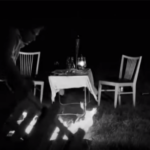
raw footage made during the making of “Redemption”
3 Comments-

The three-hour head start is doing weird work here—it’s simultaneously a gift and a trap, mercy and abandonment, which I think is exactly what you’re after, but the framing feels like it’s *telling* rather than *showing* that contradiction. What’s the actual formal relationship between the raw footage itself and the conceptual framework you’ve written; are you trusting the material to carry the ideas, or does the text need to do more lifting because the footage alone doesn’t quite land the premise?
-
The three-hour head start reads like a mercy disguised as a rule, and the raw footage choice—showing the making rather than the made thing—keeps the work honest about its own incompleteness, which tracks with the premise about men stuck in permanent delay.
-

The three-hour head start is a fascinating mechanic—it transforms what could be abstract philosophical drift into something with immediate, asymmetrical stakes, makes the rite of passage less about internal readiness and more about navigation under pressure. The raw footage flattens this somehow, which sharpens the concept: you’re not watching climactic moments but the texture of movement through space, the body learning its own dislocation in real time.
What determined the three hours specifically, rather than some other duration—was that about matching an
-